Political will, leadership crucial to building great communities

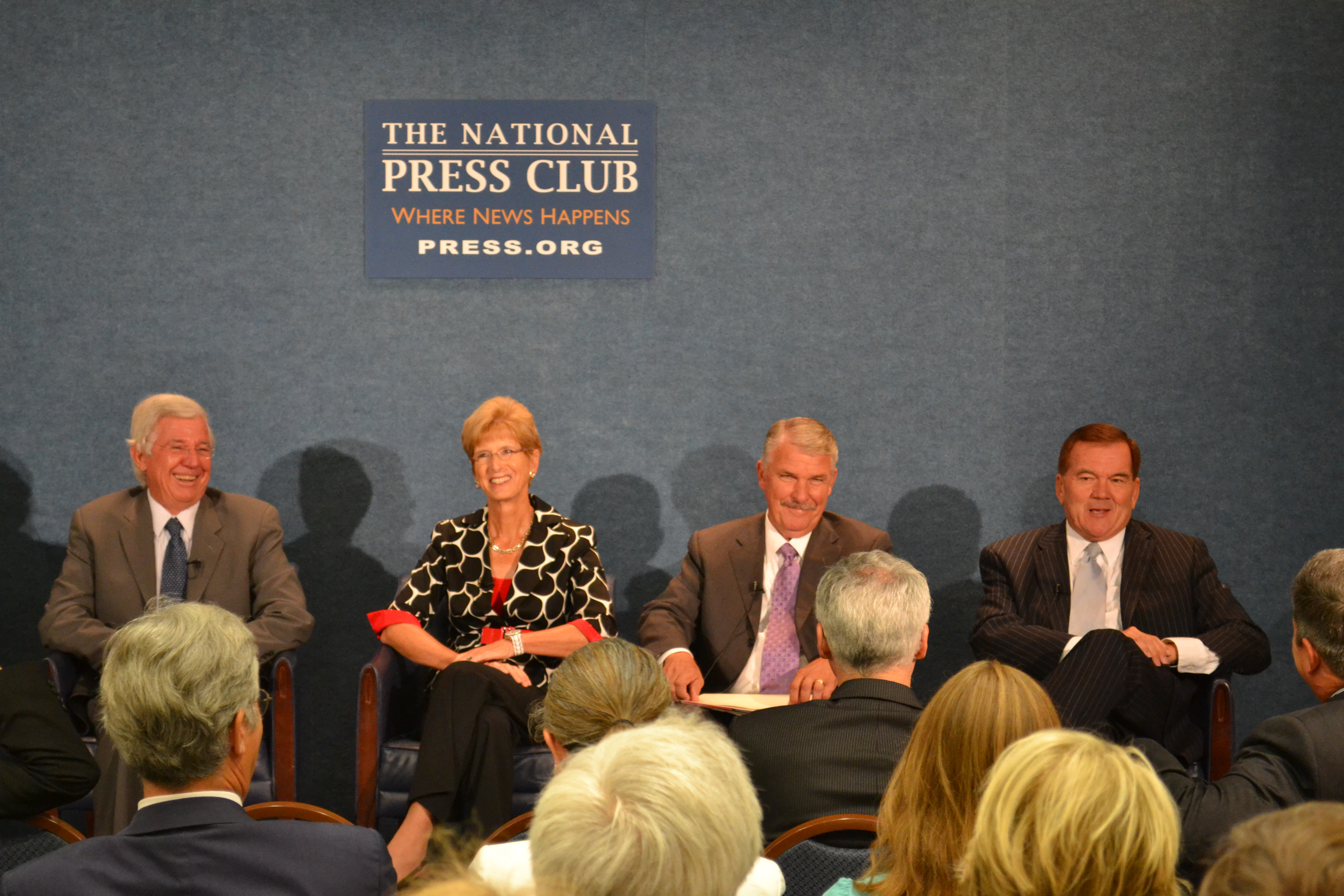
From left: former Maryland Governor and President of the Governors' Institute, Parris Glendening; former New Jersey Governor Christine Todd Whitman, former FEMA Director James Lee Witt, and former Pennsylvania Governor Tom Ridge at the Governors' Institute launch event.

Great neighborhoods, strong local economies and balanced budgets don’t happen by chance. It takes political leadership and resilience to achieve those goals – political leadership that is sometimes hard to come by.

“Everyone wants to go to heaven but nobody wants to die to get there,” said former Pennsylvania Gov. Tom Ridge during a conversation between past and current state leaders at the National Press Club today. The Governors’ Institute on Community Design hosted the event, which kicked off newly announced support for the Institute from the Environmental Protection Agency and the U.S. Departments of Transportation and Housing and Urban Development.

That reluctance to stick one’s neck out can have a negative impact on states and local communities, explained former New Jersey Gov. Christine Todd Whitman, who co-chairs the Institute with former Maryland Gov. Parris Glendening. Instead of planning for long-term, sustainable economic growth that meets a wide range of goals, it’s easy for elected officials to lapse into short-term, often politically motivated decisions.

“People have come up with this mindset that it’s an either or [between jobs and smart, long-term thinking], and we have to break that,” said Whitman, noting the pressure on state and local leaders to show immediate results.

She emphasized the need for state and local leaders to think tactically and show more resolve, a point Ridge hammered home when he likened current federal and state budget deficit reduction battles to a “kabuki dance” between political parties.

Many of the decisions needed today are bound to be unpopular, because the country needs both cuts to costly services as well as new revenue creation sources to fund important infrastructure upgrades and investments, Ridge said. Drawing attention to the need for increased leadership at all levels of government is therefore vital, as are more transparent and proactive efforts to inform the public about the realities of municipal costs.

“We almost need a public education campaign,” Ridge said about the cost of updating America’s infrastructure systems and investing in the things that will lead to long-term growth. “You flip on a light, you don’t think about [the cost]. You turn the water on, you don’t think about it.”

What that means for the country’s towns and cities is significant, as leaders shy away from making investments or bold policy changes to attract voters. Politicians on both sides of the aisle might recognize the need for smarter decision-making in light of changing market trends toward walkable, mixed-use neighborhoods and evolving population demographics, but it can be difficult to roll out reforms.

Current governors Martin O’Malley of Maryland and Beverly Perdue of North Carolina addressed that point, noting that leaders must persevere through criticism while simultaneously showing how new strategies will benefit communities over the long-haul.

“To continue to have a state that is growing as quickly as our state is growing, and to continue to have the kind of economic development we want,” Perdue said, “you need revenue … not just in North Carolina, but in any state.”

“All the great things you say during the campaign … all the, ‘I can fix it all with a magic wand,’” she said, “If you want to focus on the future, you have to make tough decisions and you can’t just stick your finger in the wind and decide which way the public is going.”

The Institute, established in 2005 and currently administered by Smart Growth America, aims to shore up political leadership and lend assistance to governors looking to promote economic development and make a better use of taxpayer dollars. Glendening said the three federal agencies’ funding support will enhance the Institute’s ability to provide technical assistance and counsel across the country.

“It’s very clear that the innovation is at the local and state level, and it’s important for us to recognize this at the federal level,” said U.S. Transportation Deputy Secretary John Porcari.

For leaders who want to address state concerns in a more comprehensive, strategic and financially sustainable way, the Institute is at governors’ disposal, Glendening said.

“We see our job in the Obama Administration as doing some of the downfield blocking,” Porcari added.
EPA, HUD, DOT partner to fund Governors’ Institute on Community Design, help states drive economic development, make better use of taxpayer dollars

FOR IMMEDIATE RELEASE: July 24, 2012

EPA, HUD, DOT partner to fund Governors’ Institute 
on Community Design, help states drive economic
development, make better use of taxpayer dollars

Former and current governors to address economic, housing and
transportation issues at National Press Club next week

CONTACT: Thomas Madrecki, 202-215-2258, tmadrecki@smartgrowthamerica.org

Former and current governors from across the country will look to address states’ most pressing economic, housing and transportation issues at a roundtable kickoff to the Governors’ Institute on Community Design next week in Washington DC.

The Institute, established in 2005 and administered by Smart Growth America, will now receive support from the Environmental Protection Agency (EPA), the U.S. Department of Housing and Urban Development (HUD) and the U.S. Department of Transportation (DOT) in a new, collaborative effort as part of the federal Partnership for Sustainable Communities.

Funding for the Institute enhances the Partnership’s ability to provide thought leadership and policy-development assistance in states looking to promote economic development and make a better use of taxpayer dollars.

Among those participating in the Institute’s panel discussion will be former Maryland Gov. Parris Glendening; former New Jersey Gov. Christine Todd Whitman; former Iowa Governor Chet Culver; former Pennsylvania Gov. Tom Ridge; current Maryland Gov. Martin O’Malley; current North Carolina Gov. Beverly Perdue; James Lee Witt, former Administrator of the Federal Emergency Management Agency; and Greg Bialecki, current Secretary of Massachusetts’ Executive Office of Housing and Economic Development. The session will be held at the National Press Club’s Zenger Room from 9 to 11 a.m.

“The Institute is a vital tool for our states’ leaders as they look for ways to trigger economic development and create strong, resilient communities,” says Glendening, who co-chairs the Institute alongside Whitman. “Governors and their administrations who reach out to us and receive assistance have access to the leading practitioners and academics in government, design and regional economics. Together we are able to map out the unique, state-specific strategies that will lead to long-term success.”

EPA, HUD and DOT’s role in funding the Governors’ Institute is a landmark step for the Partnership for Sustainable Communities, which works to provide communities with faster, more streamlined access to federal programs. The Institute is one of the first programs to receive joint support from all three participating agencies in the three years since the Partnership was established.

“We are deeply appreciative that the Partnership is investing in this program,” Glendening says. “We urge interested states to use this resource as a way to drive economic development and to create the kinds of great neighborhoods people want to live, work and play in nationwide.”

# # #

For more information about the Governors’ Institute on Community Design,
visit www.govinstitute.org

For more information about the Partnership for Sustainable Communities,
visit www.sustainablecommunities.gov

GICD workshop provides best practices to Vermont

Earlier this week, the Governors’ Institute on Community Design and our team of experts traveled to Vermont to host a workshop on disaster recovery for Governor Shumlin, his cabinet, and the community. This past August, the state suffered severe flood damage following Tropical Storm Irene. The workshop this week gave the state and the community the opportunity to hear from experts about best practices from other states as well as have a facilitated discussion for how planning should move forward in Vermont.

Local coverage can be viewed here.

Gov. Glendening in PA: Businesses and governments benefit from smart-growth principles

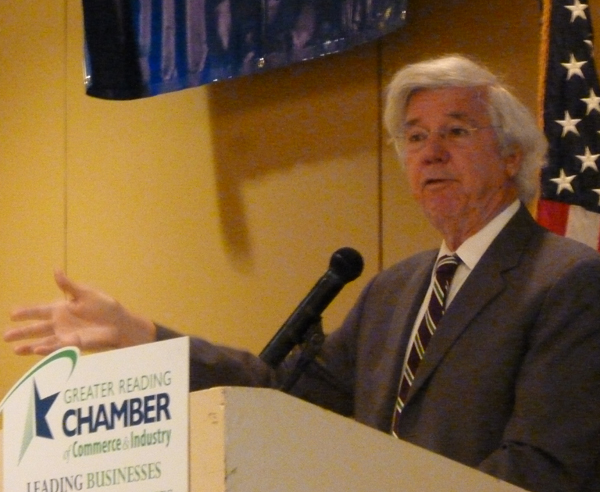
Governor Glendening in Reading, PA

Last Tuesday, President of Smart Growth America’s Leadership Institute and the Governors’ Institute on Community Design, Governor Parris Glendening spoke at the Greater Reading Chamber of Commerce and Industry breakfast in Pennsylvania about the benefits of smart growth planning and development that is responsive to current economic, cultural and demographic challenges. Read more here.

Maryland’s Arts and Entertainment Districts: how the state program works

Map of Arts and Entertainment Districts in Maryland

The semi-annual deadline for communities in Maryland to submit an application for the statewide designation as an Arts and Entertainment (A&E) District is fast approaching, on October 1. Communities can apply as a sole entity or combination of entities for the state designation which makes them eligible for various tax incentives.

The benefits offered to designated districts include:

1) property tax credits for new construction or renovation of certain buildings that create live-work space for artists and/or space for arts and entertainment enterprises;

2) an income tax subtraction modification for income derived from artistic work sold by “qualifying residing artists”;

3) an exemption from the Admissions and Amusement tax levied by an “arts and entertainment enterprise” or “qualifying residing artist” in a district.

These incentives promote smart growth, creative placemaking and community design by focusing economic development in a specific area as well as around creative industry.

This program is but one of many in the state of Maryland that supports neighborhood revitalization–other examples include Main Street Maryland, Community Legacy and Neighborhood BusinessWorks. However, when the program was created by the General Assembly in 2001, it was the only (and remains today), the only arts-based revitalization program sponsored at a state level.

Watch this space to learn more about how the program revitalized one community, and for details about this year’s selections from the Maryland State Arts Council.

Gov. Glendening challenges Ranson, WV to plan for the future, to protect resources, and to stimulate economic growth through community design

Governor Glendening in Ranson, WV

Last night, President of Smart Growth America’s Leadership Institute and the Governors’ Institute on Community Design, Governor Parris Glendening delivered the keynote address to kickoff a weeklong planning workshop in Ranson, WV (crossposted from Smart Growth America).

Together with EPA Assistant Administrator Mathy Stanislaus, Governor Glendening provided context at the opening session. Governor Glendening addressed how the Ranson community can meet changing demographic trends, protect natural resources, and overcome current economic challenges through planning dense, walkable, livable areas connected to housing and transportation. More information on the opening session here.

In the weeklong ‘mega’ planning workshop (September 8-14), the Ranson community will discuss issues and ideas before draft plans are completed for each of four, linked and interdependent projects that are being funded by the Partnership for Sustainable Communities. Ranson is one of only two communities that was awarded grants by all three partner agencies for a combined total of $1.4 million in planning grants (the other community is Denver, CO). Read more about the weeklong workshop and the four projects at Ranson Renewed.

Since the Partnership for Sustainable Communities was created in 2009, the Governors’ Institute on Community Design has supported the Partnership’s efforts to improve access to affordable housing, more transportation options, and lower transportation costs while protecting the environment in communities. The Governors’ Institute has served as a liaison between the Partnership and state administrations, hosting meetings to allow for a dialogue between federal and state officials. To learn more about the partnership agencies, see Partnership for Sustainable Communities.

North Carolina Sustainable Communities Grant Program announces first round of grant projects

North Carolina Community Practices Assessment

North Carolina’s Sustainable Communities Task Force recently announced the recipients of the new Sustainable Communities Grant Program, which supports regional sustainable development partnerships and makes the connection between land use, housing, and transportation issues. Recognizing that regional planning and collaboration are critical to implementing sustainable economic and community development, the state of North Carolina created the grant program to encourage cross-border efforts.

The grant program is a great example of state government recognizing the significance of regional partnerships in sustainable development. By creating incentives to strengthen regional collaboration and providing tools to assess implementation, the program helps communities become more resilient through tough economic times and create innovative solutions to sustainable development.

Nine applications were selected in April 2011, with each grantee receiving between $10,000 and $50,000. Grant applications were evaluated based on four factors: regional collaboration, evidence of need, implementation of sustainable development principles, and project effectiveness.  The Task Force awarded funds to the following entities:

City of Raleigh
Town of Morrisville
Centralina Council of Governments
Triangle J Council of Governments
City of Durham
Town of Fuquay-Varina
Town of Robbinsville
N.C. Eastern Region Military Regional Growth Task Force
Wilmington Metropolitan Planning Organization

The winning applications vary from revitalization projects to transit-oriented development studies.

Centralina Council of Governments, which serves nine counties in the Charlotte region, will use the grant fund to support communities in revitalizing vacant and underutilized properties, currently zoned for industrial purposes. The COG is targeting a total of 150,000 acres across five corridors and identifying existing and potential job centers and regional economic revitalization.

The Town of Morrisville plans on conducting market analysis to assess various options for transit-oriented development along a proposed regional rail line that would stop in Morrisville. They also intend on developing neighborhood compatibility models in order to garner community support for transit-oriented development and to meet the needs of local businesses and communities.

In July 2010, North Carolina passed legislation that established the Sustainable Communities Task Force, six guiding sustainability principles that reflect the federal Partnership for Sustainable Communities, and a $250,000 state grant fund to encourage regional planning and collaboration. The grant fund was available to regional bodies, cities, and counties that are part of a regional sustainable development partnership.

In addition to the grant application, applicants were required as part of the submission to complete the Community Practices Assessment (CPA), a scorecard that allows local governments and regional bodies “to evaluate their current practices and identify opportunities for improvement in six areas of sustainable development.” While the CPA did not drive the grant project selection, the assessment tool helps applicants increase their transparency and accountability of investments they make by tracking progress and measuring performance over time as they move their planning efforts and projects forward.

Previously in April 2010, the Governors’ Institute on Community Design hosted a workshop for Governor Bev Perdue, members of her cabinet, state legislators, and local leaders assisting with the legislation development and other sustainability initiatives in North Carolina, such as the development of the CPA.

Read more about each winning project here.

Governor Whitman: Great places are created by good design and smart policy

Policy plays an important role in building great places. That’s the message Governor Christine Todd Whitman delivered to leading civic leaders, policymakers, urban designers, and entrepreneurs participating in the Ford Foundation’s 75th anniversary forum on July 14, 2011.

Gov. Whitman, a key member of the GICD’s Governors’ Council, spoke about the importance of design in creating great places. Stating that “one of things we found early on is that part of what defines neighborhoods is their physical aspects – what they look like,” she discussed how elements such as front stoops allow for the the development of community. She recounted how, as Governor of New Jersey, she saw first-hand how many well-intentioned rules and regulations prevented such design elements and planning strategies from creating great places.

Governor Whitman also addressed the role of governors in creating vibrant, livable cities. Stating that “governors can do a lot to help create an atmosphere that allows for cities to grow,” she stressed the importance of coordinating the efforts of state government and breaking down silos. Governor Whitman mentioned the Governors’ Institute on Community Design workshop she had recently attended and how such efforts to align state administrations and policies are critical to the success of cites — and how without such alignment the best of intentions and investments can be for naught.

The panel, which was moderated by E.J. Dionne Jr., columnist for The Washington Post, included Isabel Wilkerson, journalist and author; Jean Quan, mayor of Oakland, Calif.; and the Governor of Massachusetts Deval Patrick; as well as Governor Whitman.

National experts advise the Christie Administration on state strategic planning

Crossposted from Smart Growth America’s coalition partner, New Jersey Future.

The Governors' Institute hosted a workshop in Trenton, New Jersey for the state cabinet members on May 18th and 19th.

Last week, the Christie administration hosted a Governors’ Institute on Community Design workshop to explore advancing a state strategic plan that focuses on economic development and the importance of location. The event was a milestone in the administration’s state strategic planning project, which is developing recommendations for how to prioritize and support sustainable economic growth.

Lieutenant Governor Kim Guadagno along with cabinet members and other state officials attended the day-and-a-half long workshop. Visiting speakers included Doug Foy, President, Serrafix and former secretary of Commonwealth Development in Massachusetts; Mitch Silver, Director of Planning and Economic Development for Raleigh, North Carolina; and Daniel Hernandez, Managing Director of the Planning Practice at Jonathan Rose Companies. Kicking off the event were GICD Chair and former Maryland Governor Glendening and former New Jersey Governor and GICD co-chair Christine Todd Whitman.

“Governor Christie was pleased to host the Governor’s Institute on Community Design, “said Wayne Hasenbalg, Deputy Chief of Staff for Policy for the Christie Administration. “This Administration is taking a thoughtful approach to economic development that includes looking at the most efficient places to direct growth.”

The administration is expected to finalize recommendations to the Governor in July. For more information about these and other workshops, visit the Governors’ Institute on Community Design.

Driving up costs: Reconsidering school sites in an era of unpredictable gas prices

A long line of schoolbuses parked in Millburn, Illinois.

Fuel costs are rising rapidly, and individual drivers aren’t the only ones feeling the pain. School transportation systems around the country are struggling to adjust to cost increases. In a survey of school districts conducted last month, almost 76 percent of transportation directors report that rising fuel costs are affecting operations.

Unfortunately, in the past few decades many school districts have – literally – built gas price vulnerability into the system, often influenced by shortsighted state standards for school construction and renovation. For example, many states require schools to be built on excessively large lots to accommodate fields and parking.

As a result, more and more schools are built on the outskirts of communities, far away from the students they serve. While 87 percent of students lived within one mile of school in 1969, that number had dropped to 21 percent by 2001. Even when students live within walking distance, roads are often too hazardous for walking to be a safe option.

The alternative? Lots of buses and automobiles, which means lots (and increasing amounts) of money spent on gasoline and maintenance.

Some states, however, are leading the way with policies to encourage a return to community-centered schools located within walking distance of as many student homes and community amenities (such as parks and libraries) as possible.

For example, explains the National Trust for Historic Preservation, the New Mexico Public School Facilities Authority revised school site recommendations in 2009. The State shifted away from recommending a specific acreage and now asks that districts submit information on the desired learning environment when they apply for state school construction funding. Other states that have eliminated minimum acreage requirements include South Carolina (2003), Rhode Island (2005) and Minnesota (2009).

In 2010, New Hampshire’s legislature passed a law requiring school construction or renovation plans to comply with the State’s statutorily adopted principles of smart growth and its comprehensive plan. It also “limits additional land acquisition in school renovation projects to only that which is necessary to ensure the safe flow of traffic.”

Because of rising fuel costs, school districts are cutting field trips, reallocating general fund dollars, and reducing repair funding to make ends meet. Twenty-two percent of districts have reduced bus services.

Gas prices will continue to fluctuate, and these short-term stopgaps won’t provide long-term sustainability. As one part of the solution, state government can help make sure more schools are located in places that minimize transportation costs – and maximize the number of dollars available for student education and enrichment.

For more state policy recommendations to encourage community-centered schools, see Policies That Work: A Governors’ Guide to Growth and Development.