How a singular focus on speed leads state DOTs to overspend and overbuild

The most productive state departments of transportation are those that have come to grips with the fact that moving cars fast all the time is hard to square with most of their other stated priorities, whether improved safety, more mobility, or reduced costs.

Over the last two years, The Governors’ Institute on Community Design has been working to help a small group of state departments of transportation question and assess the underlying assumptions that result in giant highway solutions for every transportation problem. This is the second in a series about the states that are finding success through what’s known as practical solutions, a way for transportation departments to meet changing demands and plan, design, construct, operate, and maintain context-sensitive transportation networks that work for all modes of travel. Read the third post here.

a variable traffic message board above a tunnel that reads Building a better state DOT
An example of two streets managed by a state DOT, with drastically different purposes. Does your state know how to treat them differently?

In our first post, we showed how state departments of transportation (DOTs)—with highway-building DNA embedded deep within them—are now tasked with building and/or operating transit, building streets to serve a wide range of mobility needs, moving people instead of just vehicles, to name just a few. And then they are asked to balance this new diverse portfolio against a single stated (explicit or implicit) priority of building roads on which cars can always travel as fast as possible.

As we chronicled, even in states that want to find a new way of doing business, most struggle against decades of embedded culture and practice that was designed to create the Interstate system and move vehicles quickly through communities. Some are being given what could best be described as an impossible task: help connect people to places worth visiting, and then make certain they never have to slow down once they get there, making it not that enjoyable to visit.

What are some of the biggest struggles for state practitioners, and what have we seen in our two years of work with a handful of them? Here are four things we frequently hear:

It’s nearly impossible to square the priority of speed with most other state goals
It’s hard to surface the assumptions that are rooted deep in the DNA of a state DOT. And their assumed number one priority is so built-in from decades of practice that it’s rarely stated out loud. This assumption of “the cars need to always move fast and never slow down” is at the root of most of the big problems that they face. Engineers have a prerequisite—sometimes explicitly stated but always implicit in the agency’s culture of practice—that makes every other priority a nearly impossible task.

Make sure the vehicles can always go fast

AND

  • Prioritize repair first
  • Keep everyone safe, including people walking & biking
  • Create vibrant places worth visiting
  • Keep your costs low
  • Don’t negatively impact nearby communities
  • Help connect everyone to jobs and opportunity, whether they drive or not
  • Promote sustainable and lasting economic development
  • Reduce transportation-related emissions

In practice, what this turns into is a list of secondary goals states would like to accomplish, that usually get sacrificed for the real top priority of speed. Until we come to grips with the fact that moving cars fast at all times of day without delay is a goal that can’t always be squared with all of the other priorities, until we can admit that perhaps everyone is not going to be able to go fast all the time, we’ll continue building unnecessarily large and expensive roads where speed is the number one priority and most other priorities fall by the wayside.

States expend a lot of effort trying to squeeze square pegs into round holes, rather than using round pegs
When faced with the challenge of connecting people to jobs and efficiently moving goods and people around, the starting point is usually a high-capacity road or highway. It’s the logical output of state DOTs created to build the autobahn in the US, that got so good at building this one product that they now try to build it everywhere. They take this product and use it as the template to build roads that go through neighborhoods, by schools and are supposed to serve as main streets. The states currently finding a better way forward are opening up their arsenal of solutions to be far more diverse.

State DOTs are reluctant to believe that they can or should dictate behavior
When talk turns to trying to design streets to be safer (which often requires slower speeds), I’ve had traffic engineers express discomfort with using roadway design to dictate to people how they should behave. In fact, they are already making a million design decisions that affect how we behave behind the wheel—including setting speed limits. States design roads to indicate to drivers that they should go fast (with wide, straight lanes and infrequent signals or crossings), and then are surprised when drivers respond logically to that design, acting as if there is nothing they can do to change that or slow them down.

A singular focus on reducing delay leads state DOTs to overbuild roads, waste money, and generate more traffic, as well as many other frequent problems
Design decisions are too often dominated by the worry that traffic level-of-service (delay) might be bad for even short periods of time, and so streets get overbuilt.

Constant free-flowing traffic 24/7 is perpetually held up as the ideal, and we invest accordingly, but we’d never make fiscal decisions like this with our own money. Say you have a big party at your house a few times a year with 50-75 people. Would you pay to renovate the house you live in to add six more bathrooms to ensure that no one has to wait to use the restroom at your party? Or would you rationally expect a bit of waiting? The states going broke (or begging for more money) are the ones that spend millions trying to address a few minutes of excessive delay that happen at limited times.

We always believe the roadways will get more demand, and then it becomes a self-fulfilling prophecy when we overbuild them. That overbuilt road cuts off shorter trips and makes walking and biking dangerous, and then we’re surprised when it generates traffic. The states making the most of their money these days are the ones targeting their investments to the places where traffic truly is bad for the longest period of time, as opposed to trying to avoid any slow down whatsoever.

Even better yet would be agreeing that, sometimes, slower moving traffic is the goal, because it makes the road safer and the surrounding place or neighborhood a better place to be.

Up next, we’ll be looking specifically at some of the recurring lessons we learned over the last two years as we worked with these handful of states to find more flexible ways to solve their problems.

Read the third post of this series: Building a better transportation system starts long before breaking ground>>
Six state DOTS selected to receive hands-on assistance

We are proud to announce that six state departments of transportation will receive free technical assistance designed to develop flexible ways to meet their users’ needs with practical solutions that cost less to design, build and maintain.

State departments of transportation face increased demands on both their networks and their budgets. Our Accelerating Practical Solutions Program will work with six competitively selected states to help them make investments in transportation that put people first and don’t break the bank:

  • Delaware
  • Iowa
  • Louisiana
  • New Hampshire
  • North Dakota
  • Virginia

Congratulations to these six states. Learn more about what the states we’ll be working with hope to achieve:

Iowa is committed to providing a transportation system that gets you there safely, efficiently and conveniently. We believe the principles taught in the Smart Growth America’s Accelerating Practical Solutions workshop will help us better utilize flexibility and innovation to achieve that goal.”

“The Louisiana Department of Transportation and Development looks forward to finding additional ways to work with other federal, state, and local government agencies and engage the public to come up with transportation solutions that enhance communities and serve all users of the transportation system,” said Dr. Eric Kalivoda, Deputy Secretary of LADOTD.

“The workshop will be especially timely as the New Hampshire Department of Transportation develops new pedestrian and bicycle design criteria that considers safety and access for all modes of travel. The department extends a warm welcome to the Governors’ Institute on Community Design.”

North Dakota seeks to enhance integrated decisions about transportation and land use that meet the needs of all roadway users, and support healthy, vibrant, and economically strong communities.”

“We are honored to be selected for Smart Growth America’s Accelerating Practical Solutions workshop and look forward to learning how to expand and improve Virginia‘s efforts to plan and deliver efficient and affordable solutions to transportation challenges throughout the state.”

Technical assistance will also be awarded to the Delaware Department of Transportation as they work with the University of Delaware on improving access for people of all abilities.

Our expert staff will bring together DOT staff with MPOs, consultants, local governments, advocacy groups, transit agencies, and others for a technical assistance workshop in each state. We’ll explore a range of topics, such as balancing the needs of all roadway users in a variety of contexts, how to take advantage of existing flexibility in design, integrating transportation and land use decision-making, right-sizing projects, and how to make the organizational and cultural changes required to implement practical design.

Interested in this bringing this work to your state? Contact us to learn more about bringing a Practical Solutions workshop to your community >>

Resilience in the U.S. Virgin Islands

usvi-gicd

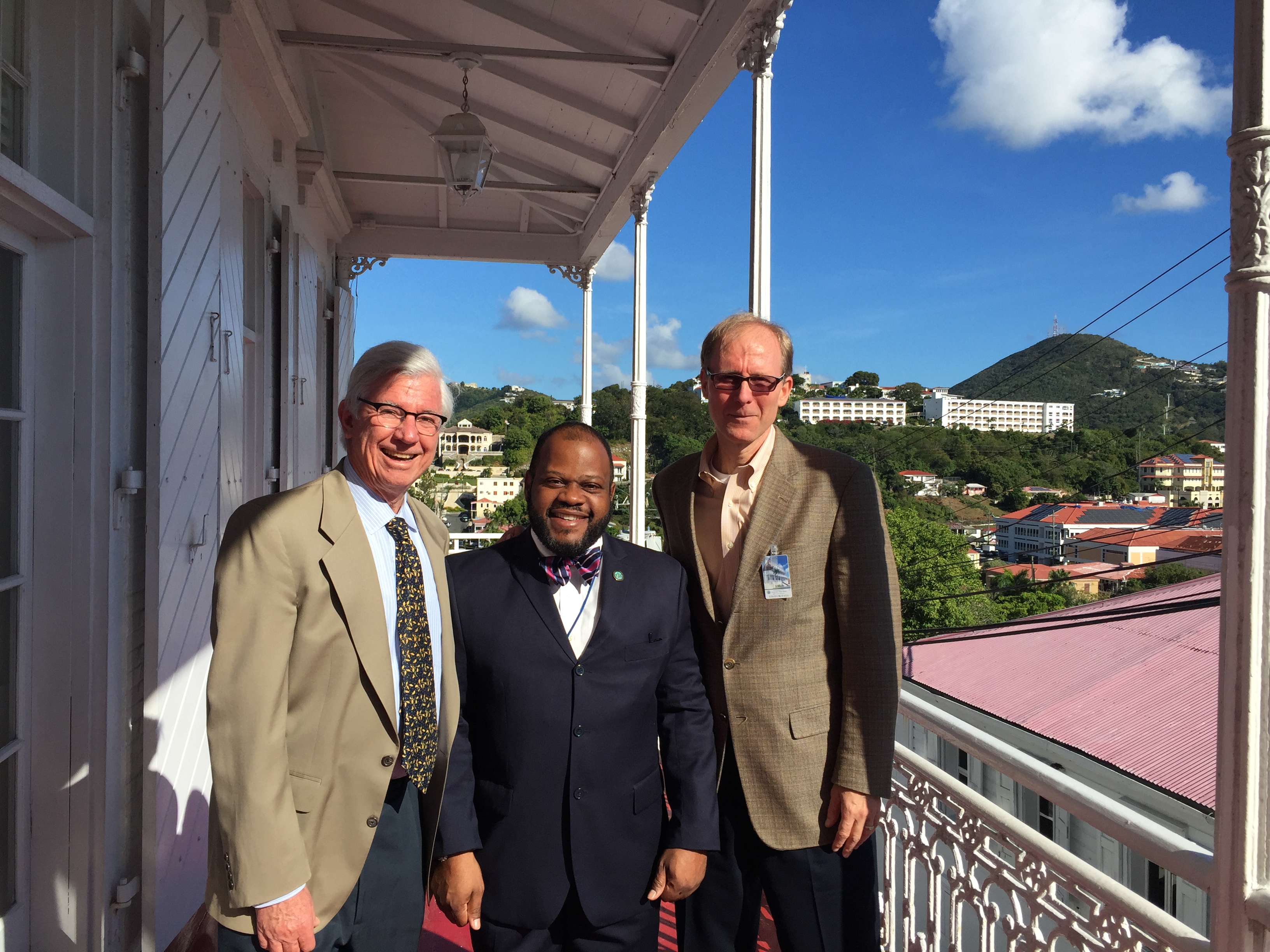
Our team was in the U.S. Virgin Islands last week to help the territory plan for resilience. “Overall, the workshop generated several powerful new ideas and identified a number of short-term solutions that the Climate Change Council can take action on immediately,” said Shawn-Michael Malone, Climate Change Council Chairman.

Over the course of the workshop, participants heard presentations on how to make the Virgin Islands more resilient in the face of hazards associated with climate change, including erosion, hurricanes and rising sea levels. At the same time, members of the Council educated the GICD team on the unique issues facing the Virgin Islands and on our community’s priorities.

On the first day, discussions focused on sharing that critical information and exploring different strategies for reducing risk and building long-term resilience. The second day began with a review of issues raised by the group, and continued with a presentation of possible recommendations for the Virgin Islands and a discussion of how the Climate Change Council could put them into action.

Recommendations included:

  • Developing a “resilience vision” for the Virgin Islands.
  • Altering the hazard mitigation planning process to include climate change strategies, proactive land management, scenario planning, and incorporating adaptation.
  • Educating the public on the hazards of extreme weather and climate change through local schools and universities, youth programs, and existing health and wellness programs.
  • Expanding the disaster recovery process to include climate change planning, while ensuring that citizens are not overburdened by new codes and standards.

The GICD team thanks Governor Mapp and his administration for their ongoing commitment to the protection of life and property in the U.S. Virgin Islands.

Massachusetts announces a “common vision” for housing, transportation, and the environment

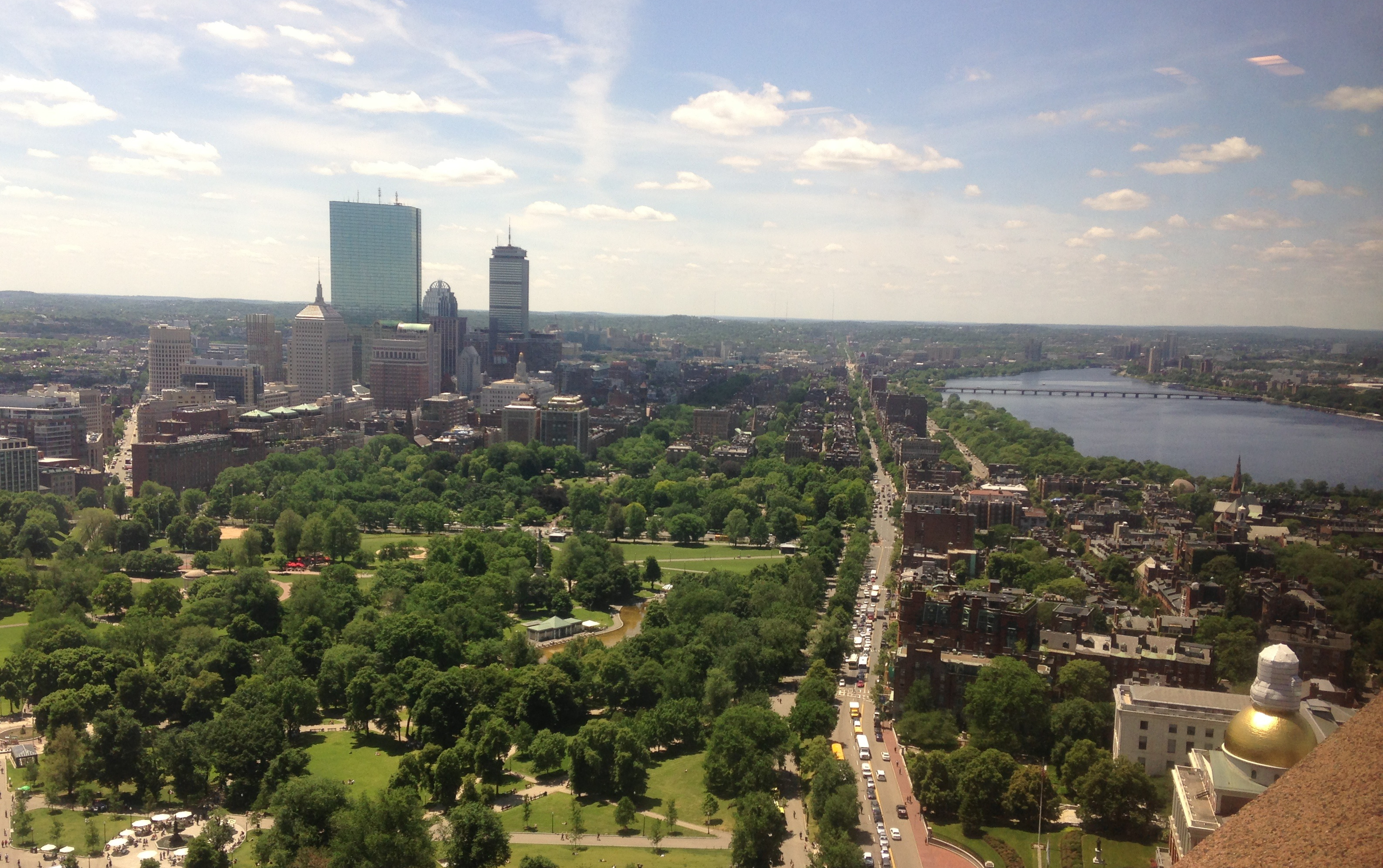
Boston skyline

In fiscally challenging times, states can achieve more when their agencies work together toward common goals. Massachusetts is doing exactly that.

Yesterday at the Multi-Family Housing Summit in Boston, three members of Governor Deval Patrick’s Cabinet announced their common vision for growth in Massachusetts. The vision highlights the housing, transportation, and environment agencies’ strong commitment to plan ahead for future growth and the Commonwealth’s Sustainable Development Principles. The goals are to:

  • Build 10,000 multi-family homes a year through 2020, particularly near transit, city/town centers and employment centers;
  • Shift the way we travel, by tripling the share of travel by bicycling, transit and walking; and
  • Reduce greenhouse gas emissions by 25% from the 1990 levels by 2020.

“We will achieve [the vision] only if we work together,” Transportation Secretary Richard A. Davey said during the Multi-Family Housing Summit where the announcement was made. Understanding the key connections between housing, economic development, transportation, environmental protection, and land use, Housing and Economic Development Secretary Greg Bialecki, whose agency hosted the Summit, said, “This [vision] is a pledge that we will think about each others agencies throughout our work.”

The 10,000 multi-family housing production goal was announced in November 2012 by Gov. Patrick as an outcome of the Governors’ Institute on Community Design workshop, which was held that summer.

In addition to the partnership, the Executive Office of Housing and Economic Development announced the formation of the Multi-Family Housing Advisory Committee to build broader support for multi-family housing and provide a structured forum for assessing and recommending new policies. The Advisory Committee will consist of 28 members, representing municipal and regional officials, members of the business and development community and non-profit and advocacy organizations, and will be staffed by state and quasi-public agencies. The formation of the Committee was also a recommendation made by the Governors’ Institute.

Similar stakeholder groups attended yesterday’s Multi-Family Housing Summit to discuss tangible strategies in achieving the 10,000 multi-family housing production goal. Bill Fulton, Director of the Governors’ Institute, presented on the recommendations that GICD provided in 2012 and facilitated the discussion.

The Governors’ Institute’s technical assistance is made possible and guided by the HUD-DOT-EPA Partnership for Sustainable Communities. The Partnerships promotes better coordination between housing, transportation, and other infrastructure investments to create more prosperous and vibrant communities.

Maryland’s Arts and Entertainment Districts: how the state program works

Map of Arts and Entertainment Districts in Maryland

The semi-annual deadline for communities in Maryland to submit an application for the statewide designation as an Arts and Entertainment (A&E) District is fast approaching, on October 1. Communities can apply as a sole entity or combination of entities for the state designation which makes them eligible for various tax incentives.

The benefits offered to designated districts include:

1) property tax credits for new construction or renovation of certain buildings that create live-work space for artists and/or space for arts and entertainment enterprises;

2) an income tax subtraction modification for income derived from artistic work sold by “qualifying residing artists”;

3) an exemption from the Admissions and Amusement tax levied by an “arts and entertainment enterprise” or “qualifying residing artist” in a district.

These incentives promote smart growth, creative placemaking and community design by focusing economic development in a specific area as well as around creative industry.

This program is but one of many in the state of Maryland that supports neighborhood revitalization–other examples include Main Street Maryland, Community Legacy and Neighborhood BusinessWorks. However, when the program was created by the General Assembly in 2001, it was the only (and remains today), the only arts-based revitalization program sponsored at a state level.

Watch this space to learn more about how the program revitalized one community, and for details about this year’s selections from the Maryland State Arts Council.

Gov. Glendening challenges Ranson, WV to plan for the future, to protect resources, and to stimulate economic growth through community design

Governor Glendening in Ranson, WV

Last night, President of Smart Growth America’s Leadership Institute and the Governors’ Institute on Community Design, Governor Parris Glendening delivered the keynote address to kickoff a weeklong planning workshop in Ranson, WV (crossposted from Smart Growth America).

Together with EPA Assistant Administrator Mathy Stanislaus, Governor Glendening provided context at the opening session. Governor Glendening addressed how the Ranson community can meet changing demographic trends, protect natural resources, and overcome current economic challenges through planning dense, walkable, livable areas connected to housing and transportation. More information on the opening session here.

In the weeklong ‘mega’ planning workshop (September 8-14), the Ranson community will discuss issues and ideas before draft plans are completed for each of four, linked and interdependent projects that are being funded by the Partnership for Sustainable Communities. Ranson is one of only two communities that was awarded grants by all three partner agencies for a combined total of $1.4 million in planning grants (the other community is Denver, CO). Read more about the weeklong workshop and the four projects at Ranson Renewed.

Since the Partnership for Sustainable Communities was created in 2009, the Governors’ Institute on Community Design has supported the Partnership’s efforts to improve access to affordable housing, more transportation options, and lower transportation costs while protecting the environment in communities. The Governors’ Institute has served as a liaison between the Partnership and state administrations, hosting meetings to allow for a dialogue between federal and state officials. To learn more about the partnership agencies, see Partnership for Sustainable Communities.

Governor Whitman: Great places are created by good design and smart policy

Policy plays an important role in building great places. That’s the message Governor Christine Todd Whitman delivered to leading civic leaders, policymakers, urban designers, and entrepreneurs participating in the Ford Foundation’s 75th anniversary forum on July 14, 2011.

Gov. Whitman, a key member of the GICD’s Governors’ Council, spoke about the importance of design in creating great places. Stating that “one of things we found early on is that part of what defines neighborhoods is their physical aspects – what they look like,” she discussed how elements such as front stoops allow for the the development of community. She recounted how, as Governor of New Jersey, she saw first-hand how many well-intentioned rules and regulations prevented such design elements and planning strategies from creating great places.

Governor Whitman also addressed the role of governors in creating vibrant, livable cities. Stating that “governors can do a lot to help create an atmosphere that allows for cities to grow,” she stressed the importance of coordinating the efforts of state government and breaking down silos. Governor Whitman mentioned the Governors’ Institute on Community Design workshop she had recently attended and how such efforts to align state administrations and policies are critical to the success of cites — and how without such alignment the best of intentions and investments can be for naught.

The panel, which was moderated by E.J. Dionne Jr., columnist for The Washington Post, included Isabel Wilkerson, journalist and author; Jean Quan, mayor of Oakland, Calif.; and the Governor of Massachusetts Deval Patrick; as well as Governor Whitman.